JOURNAL ENTRY #002
BEHIND THE BOAMBEE BULL SALE
What I learned from stepping into an industry I didn’t grow up in, being trusted with the story of a family business, and somehow finding myself marketing my first bull sale.
I didn’t grow up in agriculture, and until relatively recently, I knew very little about it.
My introduction to the industry came through my work at TNM, where I had the opportunity to start working with producers and agricultural businesses. It didn’t take long for something about it to click. I loved being on farm, I loved the people, and I was fascinated by how much sat beneath the surface of businesses that, from the outside, could appear relatively simple.
There were generations of knowledge behind everyday decisions. Family history intertwined with business. Years of breeding decisions visible in the cattle standing in front of you. Seasons completely outside anyone’s control influencing what happened next.
By the time I started Stray Studio, I knew agriculture was an industry I wanted to continue working in. But knowing I loved it and actually understanding it were two very different things.
Before Boambee Angus, I had worked closely with one other producer. I had certainly never marketed a bull sale. I’d never even been to one.
GETTING TO KNOW BOAMBEE
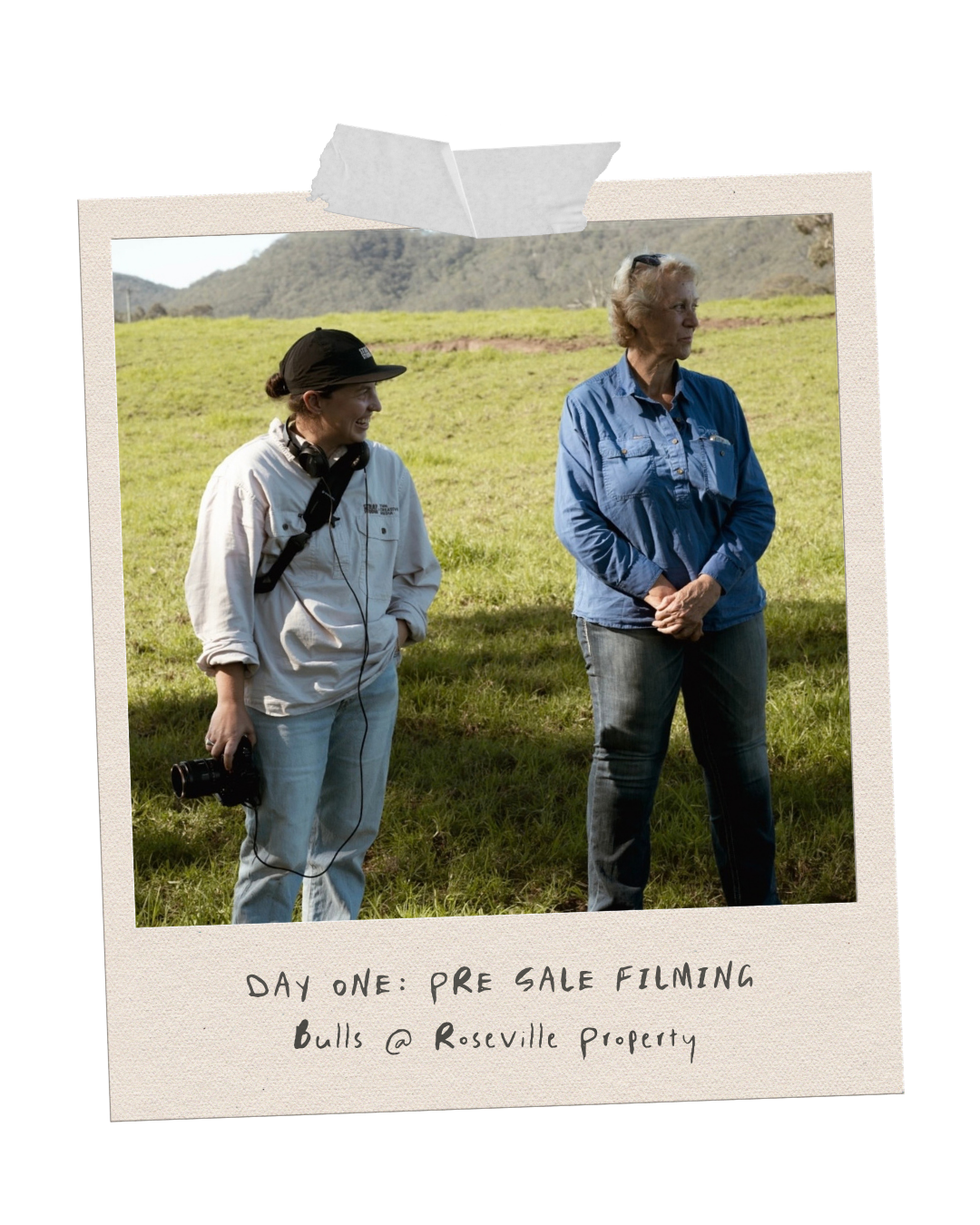
When we first started working with Boambee, the immediate project was their 2026 Bull & Female Sale. But the scope quickly became much bigger than creating a few pieces of content in the lead-up to sale day.
We were rebuilding the website, establishing a stronger visual identity, photographing and filming the cattle, producing sale lot videos, creating social content, running paid advertising, developing email campaigns and covering their Open Day and Sale Day. To do any of that properly, I first needed to understand what I was actually marketing.
That meant asking a lot of questions.
I needed to understand why particular bulls mattered, what Boambee was selecting for, how the maternal side of the herd influenced the program, why certain bloodlines kept appearing in conversations and what commercial producers were actually looking for when they came to buy a bull. There were plenty of conversations where I was probably asking something everyone else around me considered completely obvious. But I've never seen much value in pretending to understand something that I don't. The more time I spent around the Boambee team, the more pieces started falling into place. Names in pedigrees became cattle I recognised. I started understanding why particular females were important. I learnt about the Witherswood females that helped establish the stud herd, the influence of donor cows such as Kerry P0113, and how Boambee balances the data available to them with the practical realities of running cattle commercially.
I was never going to become the cattle expert in the room, nor did I need to be. My job was to understand enough to recognise what mattered and why.
That distinction has become increasingly important to the way I approach my work.
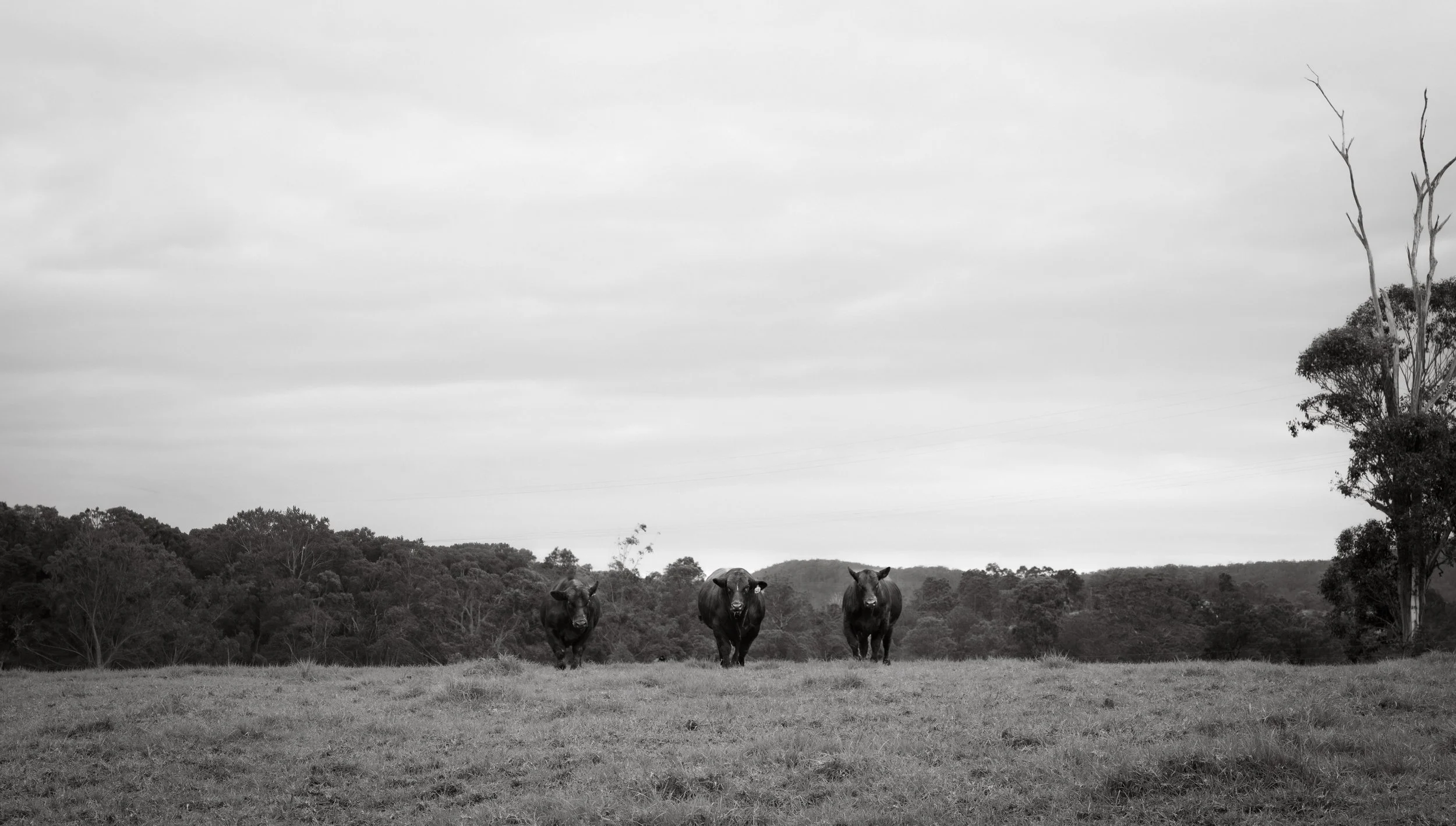
“I had never actually even attended a bull sale before”
BEING TRUSTED WITH SOMEONE ELSES BUSINESS
“There was also another side to the Boambee project that mattered enormously to me: trust.”
When a business gives you access to its social media, website and marketing, they're giving you far more than a collection of passwords and brand assets. They're allowing you to become, in some capacity, one of the voices of their business.
With a family agricultural business, there can be generations sitting behind that voice.
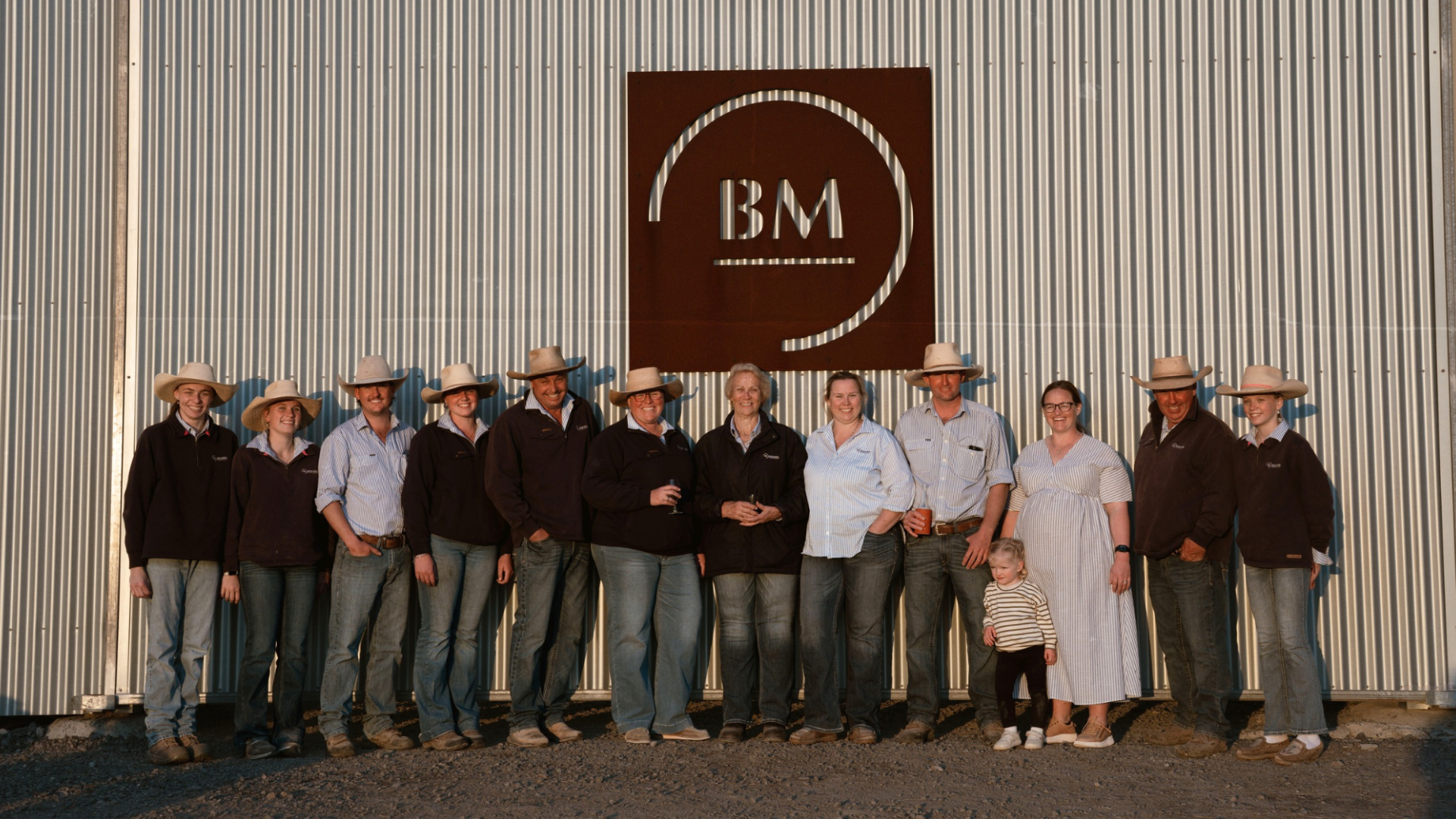
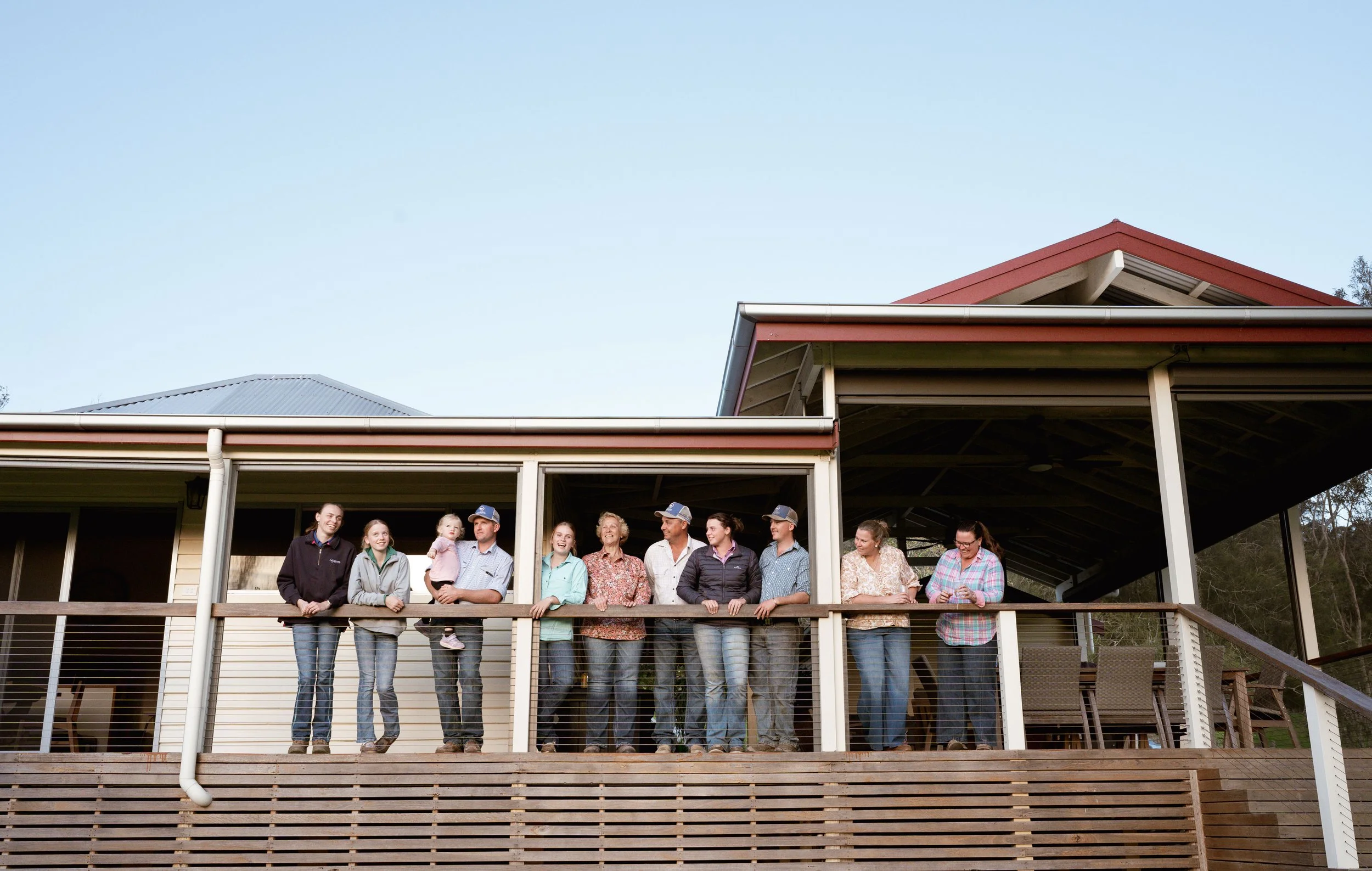
Boambee's story begins long before the current stud operation. It includes Bruce Duncan's vision for the property, the Duncan family, the team working there today, the development of the Angus herd and the commercial operation that sits alongside it.
I didn't want to take all of that and turn it into something that simply looked like work I had made.
It needed to feel like Boambee.
That became one of the biggest considerations throughout the project. We could elevate the presentation, build consistency across the brand, make beautiful films and photographs and create a more considered digital presence, but none of that should come at the expense of the character already there.
Authenticity doesn't necessarily mean making something look unpolished. A campaign can be carefully art directed, beautifully photographed and strategically planned while still being completely truthful to the people behind it.
For me, the difference is where you begin.
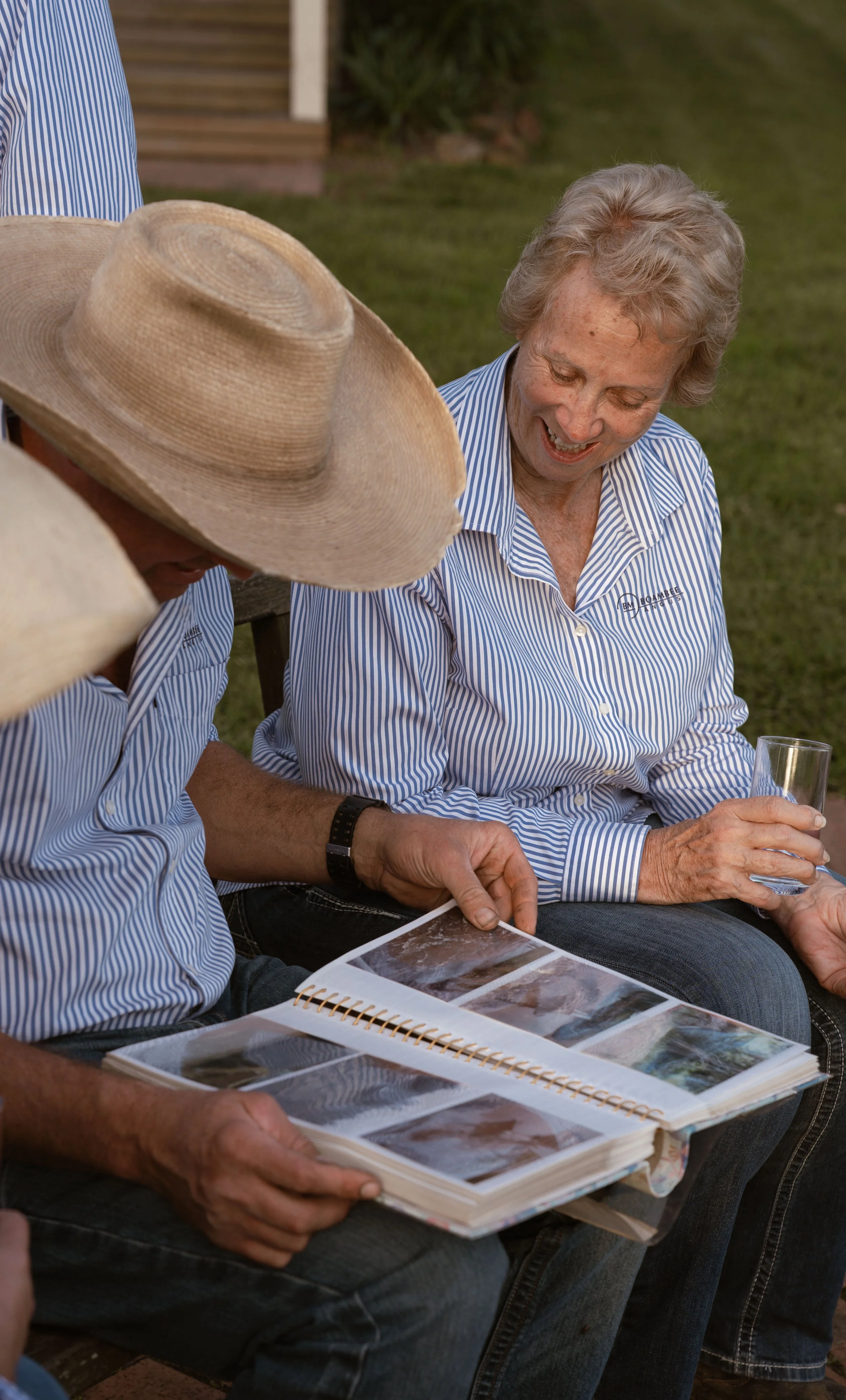
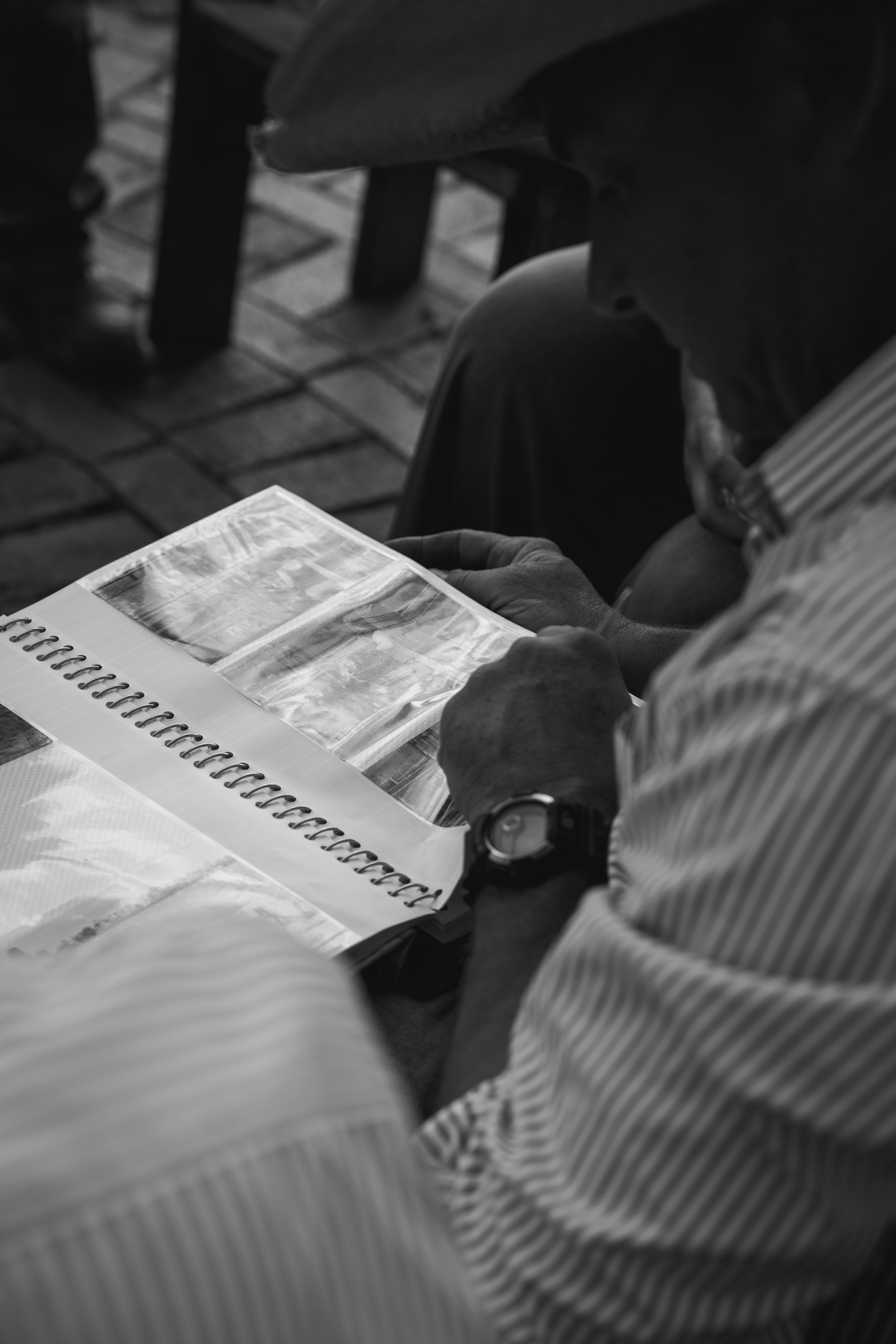
“Rather than deciding what Boambee should look and sound like and imposing that onto the business, I wanted the creative direction to come from what was already there.”
LOOKING BEYOND SALE DAY
Spending time with Boambee also meant the story naturally became bigger than the sale.
Over the course of the project, I saw the properties under incredibly different conditions. There had been significant flooding, followed by an extremely dry period where feed became difficult to source and plans for sowing paddocks were delayed. By the time we were approaching the sale, rain had transformed the country again.
Those things weren't necessarily part of a traditional sale campaign, but they were part of Boambee's story.
So were the conversations in the yards, the family photographs, the history behind the herd and the ordinary moments happening while we were there to capture something else.
The longer I work in agriculture, the more interested I become in those parts.
They're often the things a producer doesn't immediately think are worth talking about because they're simply part of everyday life. But for someone outside that world, they provide context. They help explain why certain decisions are made and, importantly, introduce the people behind the product.
That is where I think good agricultural storytelling has an important role to play.
MY FIRST BULL SALE
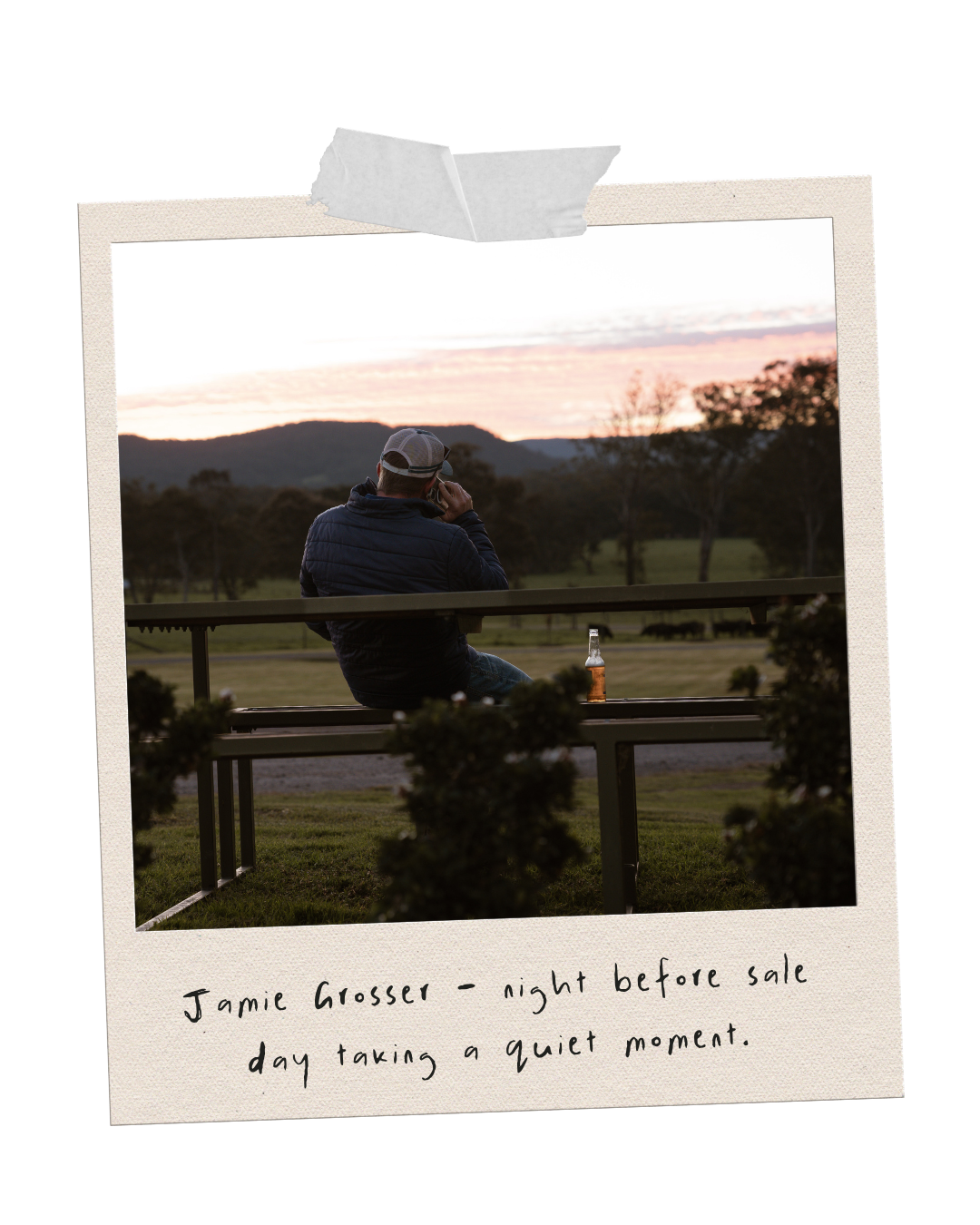
By the time Sale Day arrived on 7 August, I had spent months working towards an event I'd never previously attended.
There was something quite surreal about standing at Sinclair's Point and watching it all come together.
The cattle we'd photographed were in the yards. The sale lots I'd spent hours looking at while editing videos were suddenly moving through the ring. People who had been viewing the campaign online were arriving at the property, inspecting cattle and bidding.
And suddenly all of the individual things we'd been working on — the website, films, photography, catalogue, social media, emails and advertising — weren't individual things anymore. They were all different points of contact leading people towards the same place.
The sale ultimately achieved a complete clearance, with 31 bulls, four stud heifers and 79 commercial heifers sold. Lot 3, Boambee Vincent V144, topped the bull sale at $26,000.
Of course those results belong first and foremost to the cattle and to the years of work that went into producing them. Marketing can't manufacture that.
What it can do is help put a good business in front of the right people, give those people enough information to become interested, and make it easier for them to understand what sits behind what they're buying.
I think that's an important distinction.
One of the things I've thought about most since Boambee is whether coming into agriculture relatively new is entirely the disadvantage I once assumed it was.
Industry knowledge matters enormously, and I'm constantly trying to build mine. But there's also value in being the person who still asks why.
If I don't understand something, there's a reasonable chance someone else looking at the business won't understand it either.
If a producer tells me something that sounds fascinating and then brushes it off as completely ordinary, there's a reasonable chance we've just found something worth talking about.
THE VALUE OF NOT KNOWING EVERYTHING
My responsibility is then to pair that curiosity with respect — to learn from the people who do know, rather than pretending their expertise is mine.
Boambee reinforced for me that I don't need to walk onto a property knowing everything. I need to arrive curious, listen carefully, ask good questions and spend enough time understanding the business that the work eventually feels like it belongs to them.
For someone who had never attended a bull sale, being trusted to help market one was a fairly steep learning curve.
But that's also exactly why I loved it.
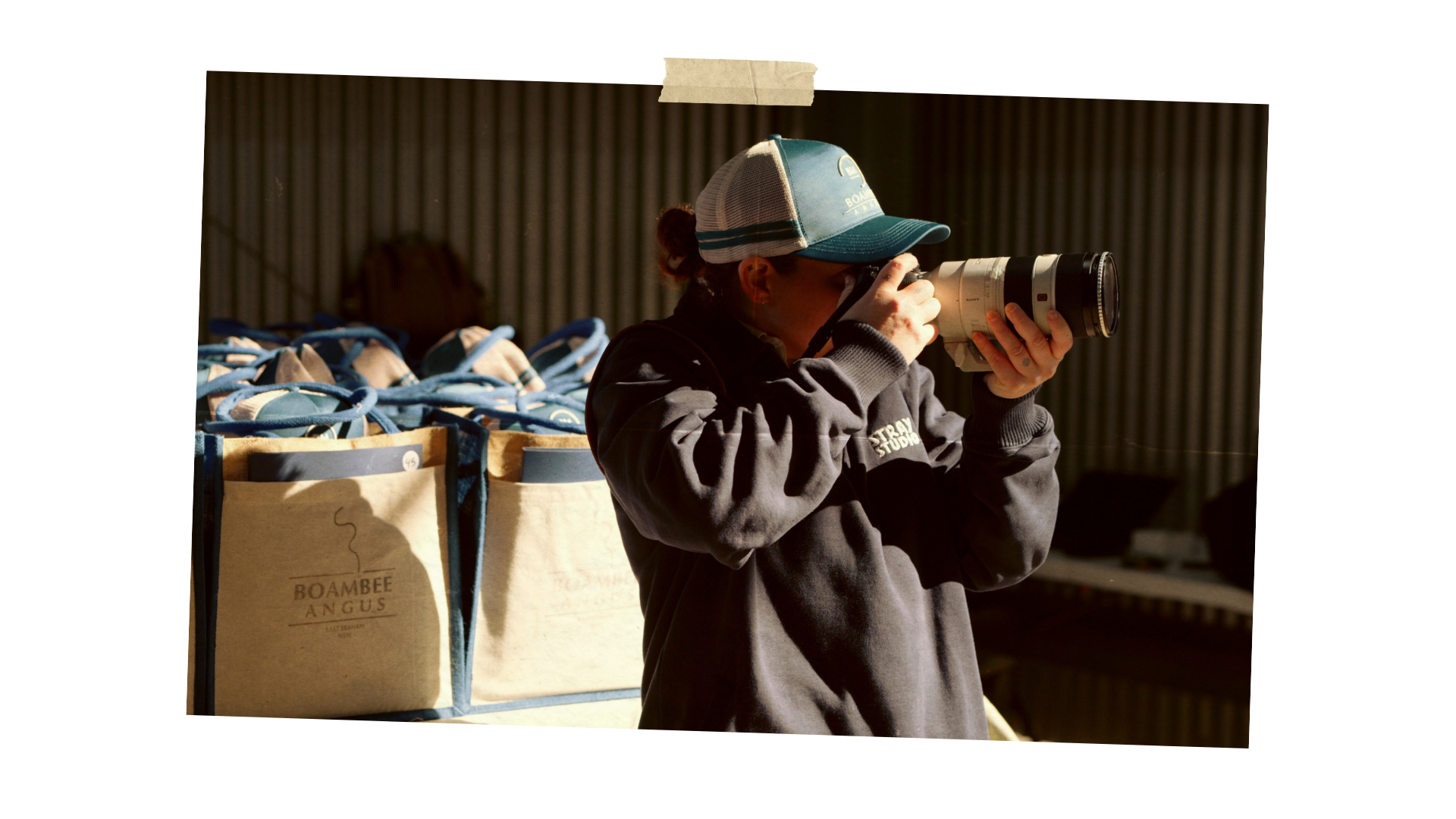
It gave me the opportunity to understand another small part of an industry I've become incredibly passionate about, and reminded me why I started Stray Studio in the first place: to get closer to the people, places and work I'm documenting, rather than simply turning up with a camera.
Being outside an industry can make you notice things the people inside it have stopped noticing.
The finished campaign matters.
But increasingly, I think the work that happens before you ever decide what to create matters just as much.